
One of the first things we did when we purchased the land for Heartstead Farms was prepare the ground for a garden.

The next thing we had to do was figure out how to keep a garden hydrated in the hot, dry Texas summer. A stock pond seemed to be the logical solution. The center of the property sits about twenty feet higher than the roadside property line, and we noticed a great deal of rain water flowed to the road. It seemed like an excellent place for a pond.
Before we could make the decision to dig, we had several things to consider:
- Purpose – What would be the purpose of our pond?
- People dig ponds for irrigation, water for livestock, fishing, or recreation like swimming or kayaking. Purpose determines size and location.
- Location – Where would we dig the pond?
- Consider water-shed. A rule-of-thumb is to consider 10-20 acres of drainage area per acre of pond. Of course, rainfall averages and pond depth should be factored.
- Soil type matters. Clay-rich soils hold water better than sandy soils, which might require a liner.
- Pay attention to what happens in a potential pond site when it rains to avoid contributing to damaging erosion patterns.
- Water Source – How would we fill and maintain the pond?
- Sources of water might include rain, a spring, creek or river.
- Maintenance – Do we have the tools and equipment to maintain the pond?
- As with any home or land improvement, ponds do require maintenance. Plan for vegetation maintenance, shoreline maintenance, access, fencing, etc.
- Environmental or Legal Considerations – What are the potential environmental implications?
- Check with the Natural Resources Conservation Service (NRCS) or local/state agencies to ensure legal requirements are known and met.
- Budget – How much do we have to commit to the project?
- Everything has a cost, so do your homework to know all expense details. As with any endeavor, unanticipated expenses may arise, so it is wise to allow a cushion for those surprise expenses.
- Timeline – When should we dig and how long can we expect to wait for the pond to be useful?
- Creating a stock pond involves factors beyond our control, so begin with the end in mind and work backwards to set a reasonable timeline for use.
- Design and Construction – What will the layout be and how will we get the job done?
- Consult with an expert.
- Consider surface area and depth.
- Create a slope that serves the purpose.
- Carefully select the size and location of the dam and spillway.
- Make a plan to prevent seepage.
- Allow grass to grow on the banks to control erosion.
- Hire the right person to do the engineering and digging.
We gave each of these questions careful considerations and were able to knowledgeably predict positive outcomes. The purpose of our pond would be for irrigation. It would be filled with rainwater runoff. We were certain we could dig and maintain the perfect pond for our garden, and we believed the benefits would outweigh the costs.

We hired an expert to help with design, and once we had the specs, he got right to work! Of course, we documented the process.

A 100 x 100 feet hole was dug 12 feet deep. The moved dirt was used to construct the dam, and the additional dirt was put aside to be used for the driveway and house pad.


A typical Texas drought makes this a long process. While we wait for rain, we make preparations for irrigation. Jeff digs a trench that will house electric lines for a pump and water pipes to carry water from the pond to the garden.

Finally!

A pump takes the water to the pipe and up to the garden.


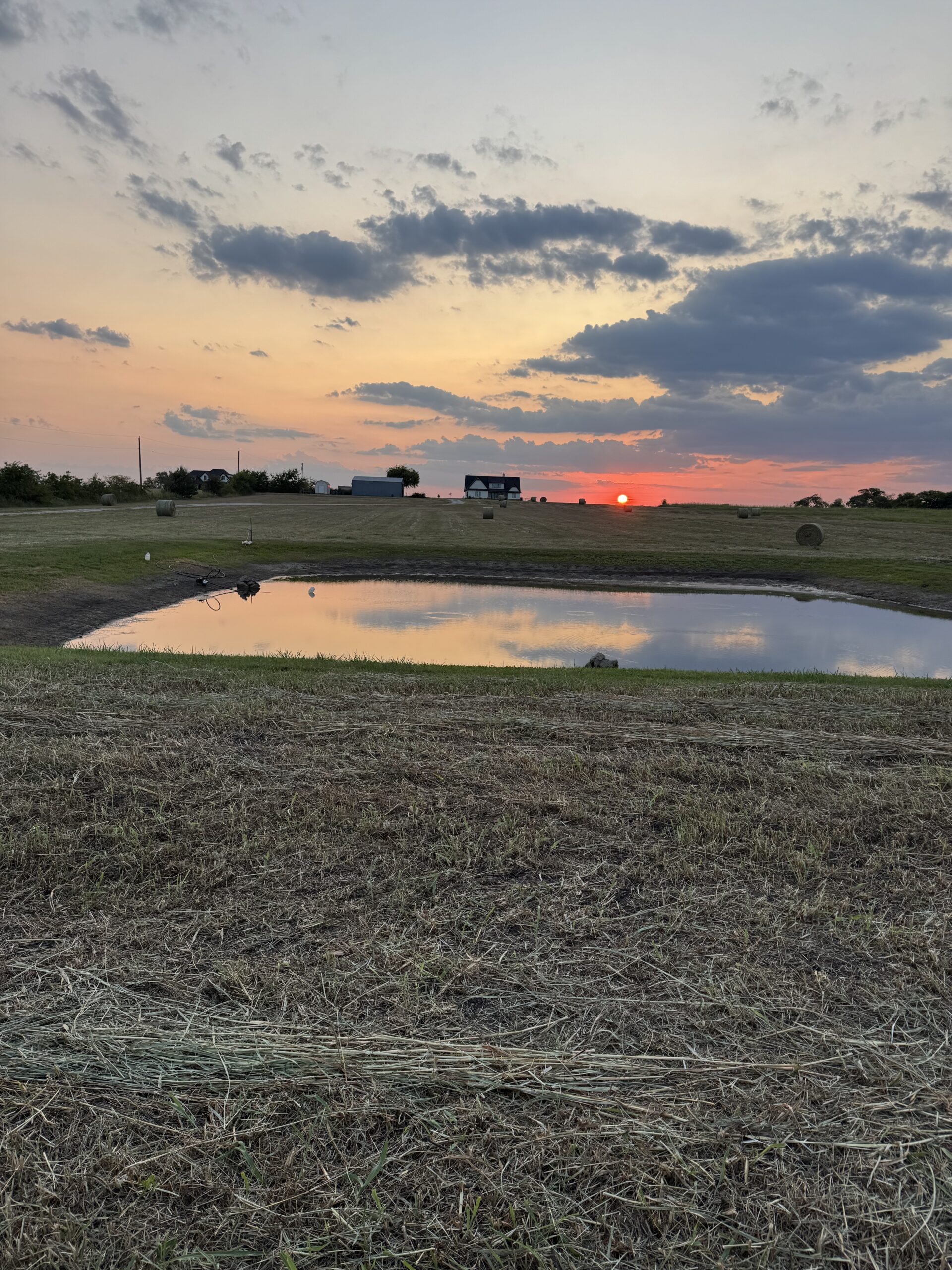
Our little pond provides irrigation and serenity. Take a deep breath, relax, and enjoy these views of the pond at dusk.