
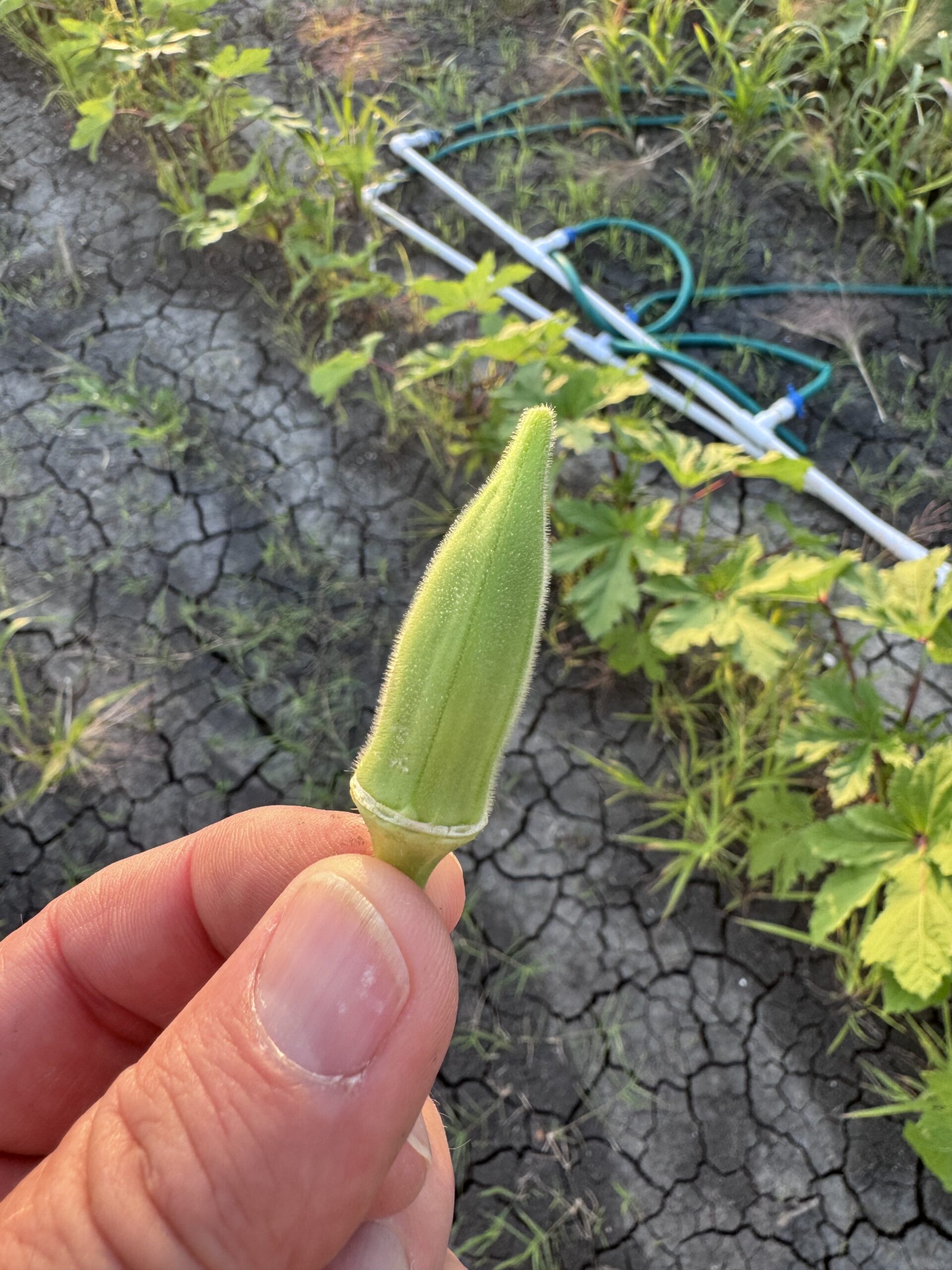

Lady’s Fingers, Devil’s Candy, Bhindi, Punjabi, Urdu, Okro, Ochro, Gumbo, Quingombo, Goo Pickles, Beelzubub’s Bog, Bamia, or Slime Pod. Whatever you call this delicious Southern vegetable, you will recognize its most common, and weird, name – Okra! Here in North Texas, okra thrives in our black clay soil and warm temperatures. We love to grow it and even more, we love to eat it!
Okra is easy to grow and we save seeds from the pods year after year to replant. You do have to wait until the soil heats up a bit as germination generally takes place at temperatures above 68 degrees. Some people suggest soaking the seeds in water the night before planting, but I usually just put them in the ground and give them a good soaking. You’ll want to plant the seeds about ⅜” to ½” deep. Young plants like water, but as the plant matures, it thrives in dryer and warmer conditions.

Harvesting takes place about 2 months after germination. If the pods get too large, they become hard and woody, so you’ll want to pick the pods when they are immature and are 3 – 5 inches long. To snap the pod off the plant, place your thumb on top, index finger on the bottom and give it quick “SNAP”. The immature pod should break off easily. If you let it get too big, you may have to snip it off with a pair of gardening scissors. Make sure you cut off those big pods, okra tends to stop production if it is not harvested regularly. And for those big pods, throw them in your compost pile – they make a great addition to your soil additives!

Okra is low in fat and contains high concentrations of Vitamin C and Vitamin K. It also contains nutrients like thiamine, folate, magnesium and potassium. So, enjoy! Okra is so good for you!

Much like Forrest Gump and Bubba’s shrimp recipes you can pickle, boil, broil, fry, stew, grill, slice, dice, gumbo, blacken, or eat it raw!
Share your favorite way to eat okra in the comments below.